

Dropzone Commander: Previews zur neuen Edition
TTCombat haben eine Artikelreihe zur kommenden neuen Edition von Dropzone Commander gestartet.
Dropzone Commander: Countdown to Drop 01 – Introduction
Welcome back, commanders. Alex here, one of the rules writers for the new edition of Dropzone Commander, that is dropping from orbit imminently!*
If you’ve attended Adepticon or the UK Games Expo you may already know this, but: We’re very excited to announce that the Third Edition of Dropzone Commander will be launching very soon!
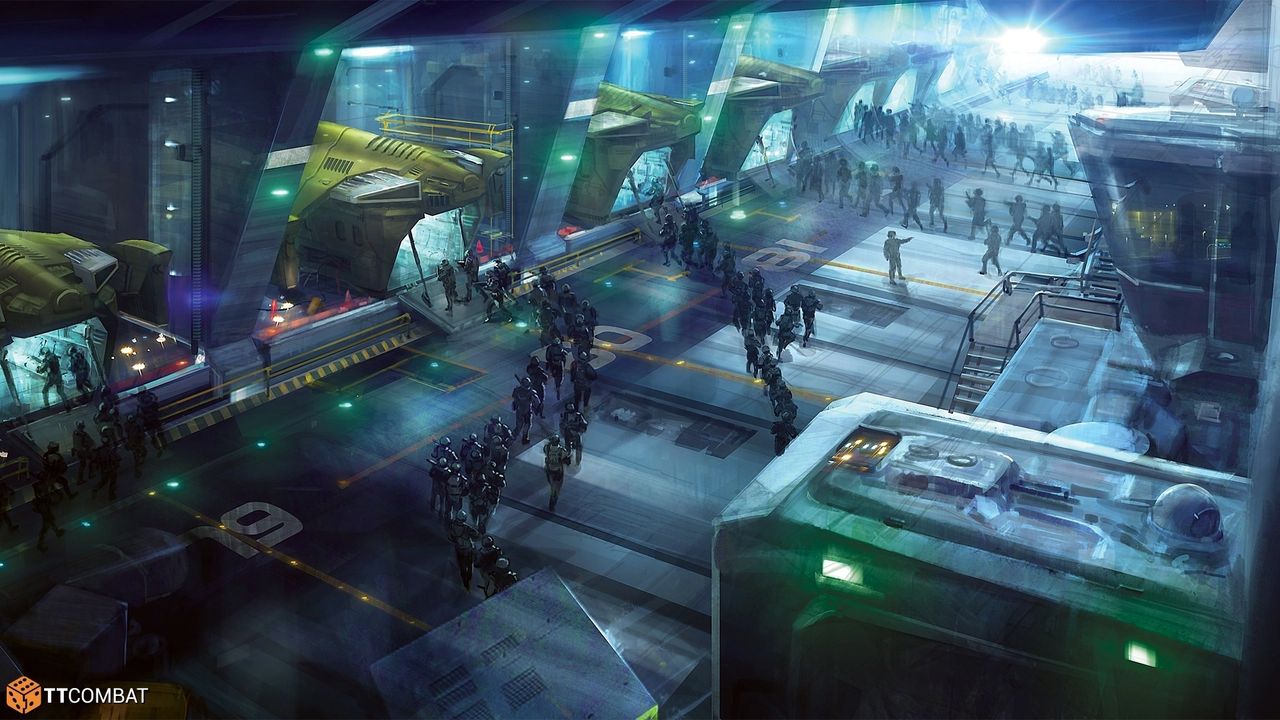
New and returning commanders will be able to get their hands on a massive** two-player starter box of all-plastic models, pitting the United Colonies of Mankind’s armed forces against a tide of menacing Bioficer constructs and their legions of flesh-wrought bio-drones.
We can’t wait to show you everything in the 2-player starter box as we get closer to release – the UCM models have been redesigned in hard plastic with the detail and intricacy Dave Lewis and the new Dropfleet Commander model range are known for, and the Bioficer half of the box (you’ll get a roughly 1,000 point army per side with a couple hundred points of spare units) are an all-new threat, taking the styles of their spaceship counterparts and expanding on them for this game of lightning fast air mobile warfare.
We’re also going to be going through articles about the rules in the run-up to release, taking you through the biggest changes and mechanics.
The game has been built as a love letter to veterans of the first edition of Dropzone Commander, while building on what made second edition great and beloved by its fans. It also introduces all-new mechanics and ideas like the command card system, keeping games dynamic and unpredictable as players manage their limited resources with custom-built decks, while tightening and modernising core systems to make a ruleset that is easy to get to grips with, while deep and rewarding to master.
Finally, we’ll be putting up faction focus articles, telling new and returning Commanders everything they need to know about the six different forces available to them – how they play, some of their iconic units, and some pointers on why that particular faction might be the army for you.
We’d love to know what you’re excited about for Third Edition – whether you’re dusting off old collections, getting hyped for how your current army is going to play in this brave new world, or just getting started with what we think is the best edition of the game to date. Let us know on our social media what you’re hyped about!
Stand by to drop, Commanders – we’ll see you on the ground.
We’ll update this landing page as we bring out new „Countdown to Drop“ articles – you’ll be able to find links to all published articles below.
* It’s the new edition of Dropzone Commander that’s dropping from orbit soon. Alex isn’t, as far as he’s aware.
** Seriously, it’s huge. We had to go up a box size to fit everything in.
Dropzone Commander: Countdown to Drop 02 – Army Composition
Dropzone Commander Third Edition is on its way, and with it, there are some major changes to the rules. We’ve made a real effort to preserve what makes the current edition of the game great, while harkening back to the glory days of first edition and making the game accessible and exciting for new players.
In this first article on the big rules changes, we’re going to talk about how building an army in Dropzone Commander works, and the new flexible system that gives lots of space for interesting decisions as a budding list-writer.
Unit Categories, Building Your Army
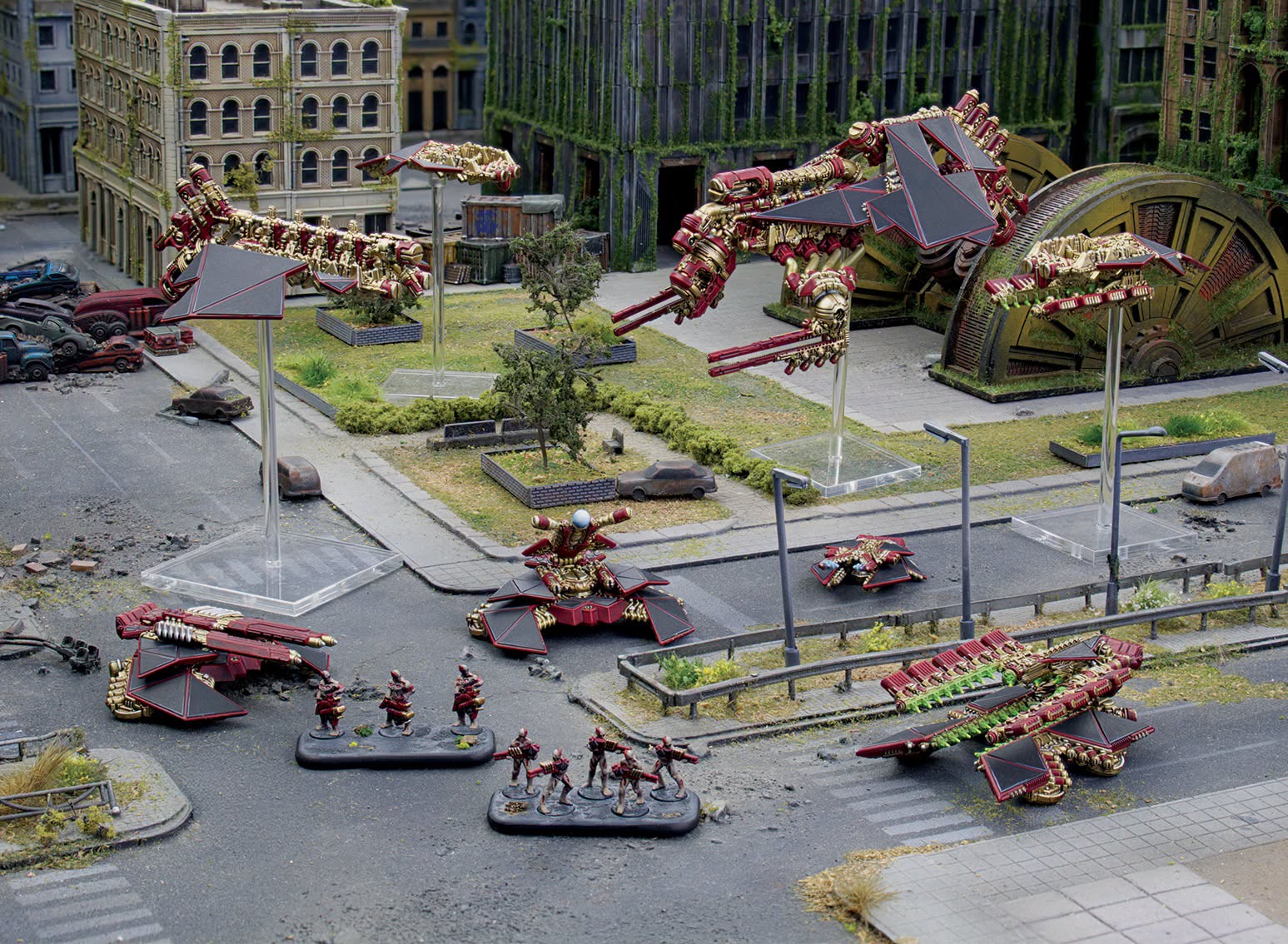
A Bioficer force combines powerful gunships, ominously floating hovertanks built for anti air and anti armour roles, and raw material-laden „Genitors“ for spawning infantry on the fly.
Dropzone has always been a combined arms game – a well-balanced force consists of an mix of armour, air and infantry power, with each of those performing different roles on the battlefield. Every army has its backbone – its “Standard” category units – that are then supported by more specialist tools, be that a column of ultra-heavy battle tanks, an elite cadre of CQB specialist infantry, or a bastion of artillery fire support.
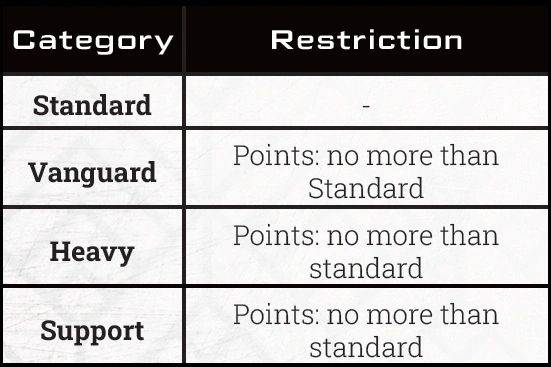
When building your army, you’ll need to consider what Categories your units are drawn from. From the points limit for your game, you can spend as many points as you like on Standard units – your basic infantry, your faction’s main battle tanks and so on.
You can then add units from the Vanguard (fast-moving interceptors, special forces infantry and forward recon vehicles), Heavy (durable and up-gunned heavy tanks, armour-clad heavy infantry) and Support (long range artillery, close air support gunship) categories, but you can’t spend more points on each category than you have on Standard units:
Many units have been moved around into different Categories from their First or Second Edition locations – you’ll find them fairly evenly distributed across the four options. Themed lists are still very much possible, but commanders that want to go “all in” on superheavy tanks or who only accept the best of the best for their infantry may have to make some compromises!
Transports and Commanders (we’ll cover the latter in more depth soon) sit outside this Category structure – you’ll still need to spend points on getting your forces to and around the battlefield and leading them, but they don’t count toward any Category.
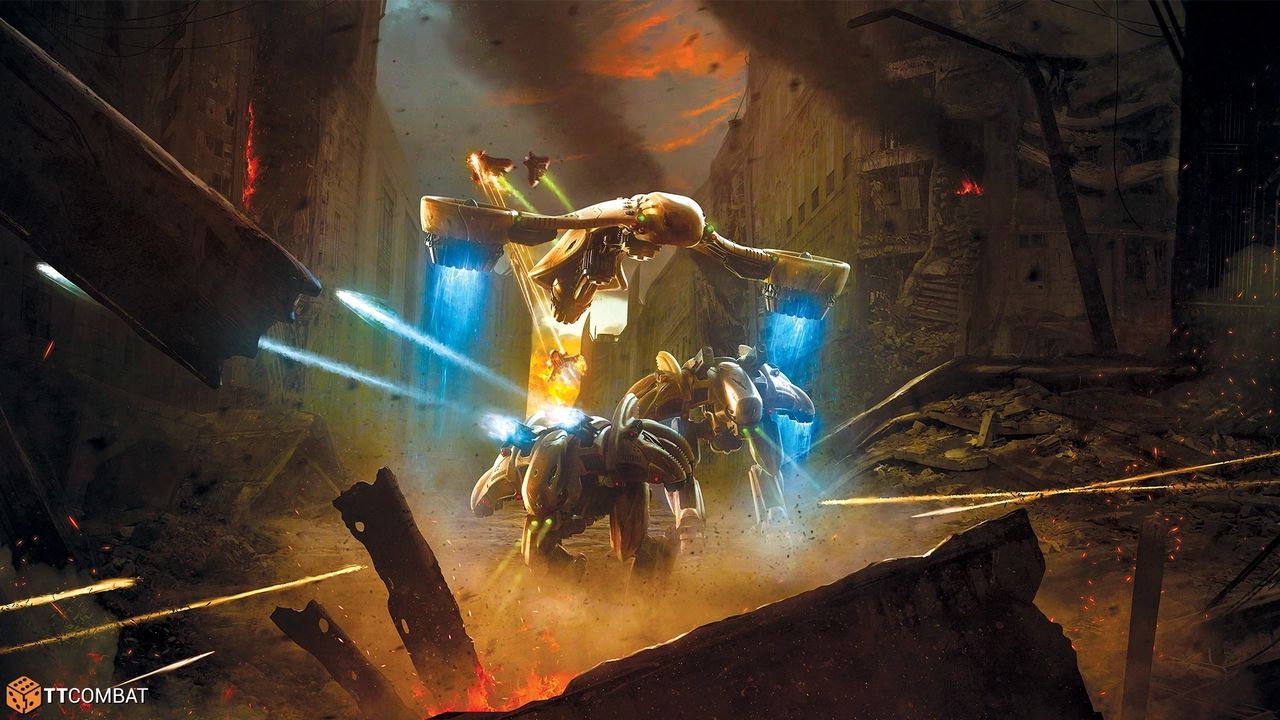
The lightning fast air-mobile warfare of Dropzone means you’ll want to keep your vehicles‘ transports nearby for rapid repositioning.
Groups
Dropzone Commander is an “Alternating Activations” game – rather than having your whole army go at the same time before your opponent’s allowed to do anything, you take it in turns activating portions of your armies with a constant back-and-forth of plays and counterplays. This is still the case, but for Third Edition, the way your army activates and fights has changed.
Battlegroups – where your army is organised into several big bricks of different squads that all activate together (even if they otherwise have no connection to each other) – are gone. In their place Dropzone now uses Groups, wherein you active single groups of squads or units when it’s your turn.
You can make Groups several ways: If a Squad has no transport, the Group is just that Squad – in fact, if the Squad consists of a single Unit (i.e., one lone model like a gunship or an interceptor), that Unit is a Group all on its own!
If – as is usually the case – the Squad has a transport, that squad and their transport form a Group. The transport activates at the same time as its cargo, flying them in and then providing fire support or loitering nearby for when they need repositioning or extraction.
Large squads that don’t all fit in a single transport may have multiple identical transports in their Group instead – so it’s possible to field a huge armoured fist of nine battle tanks, flown in and deployed by a trio of dropships.
Some transports are truly enormous, able to deploy whole platoons in one go. Multiple Squads can share one larger transport, all forming one Group. Sometimes those transports will in turn carry other smaller transports, such as a dropship carrying APCs that are carrying infantry.
Finally, some units are “Auxiliary Transports.” These have a different primary role such as providing fire support or spotting for artillery, but also have cargo space for infantry or other units. These Auxiliary Transports will have and count toward a Category, and form a Group with their embarked cargo.
Summed up, Groups are now structured around their transports. As transports are now “locked” to their Groups and can only transport their own units*, this structure makes sense – your transports will want to stick near their cargo for redeployment and extraction.
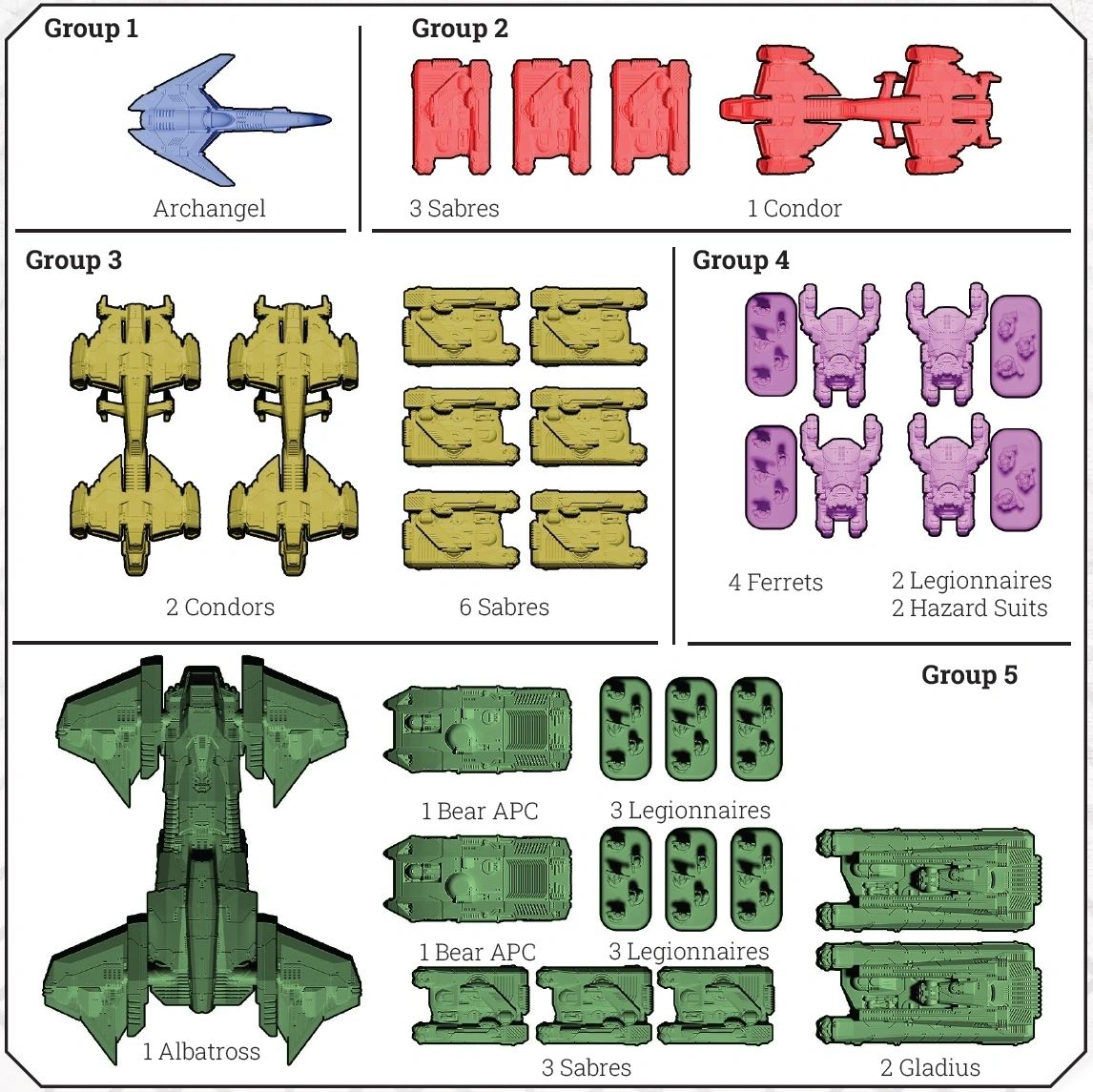
Group 1: Single Squad, no Transport. Group 2: Single Squad entirely filling a single Transport. Group 3: Single Squad filling multiple identical Transports. Group 4: One or more Squads in (but not necessarily filling) a single Auxiliary Transport Squad. Group 5: Up to 4 different Squads (with their filled Transports if applicable) filling one larger Transport.
When making your list, you’ll have interesting decisions to make: Do you want lots of smaller, more agile task-focused Groups to out-activate** your opponent? Or do you want larger, more impactful Groups of large transports stuffed to the gills with tanks, accepting the risk of being outmaneuvered for the tradeoff in firepower? An Albatross Heavy Dropship is unwieldy – especially now you can no longer “drop and shoot”*** – but being able to activate all of its transported firepower before your opponent gets a chance to return fire or scramble for cover can be devastating.
We’re really looking forward to seeing what sort of lists you guys come up with under these new systems. We’ve found the Groups mechanic leads to a much more dynamic game, and the Categories structure helps encourage balanced “take all comers” lists without stepping on the toes of themed lists.
We’ll have more rules drops for you soon, but in our next update we’ll be doing the first of our “Faction Focus” articles. Check back soon!
* Unless your Commander gets on the comms and orders them to do otherwise, anyway – we’ll cover how this works in a later article.
** “Out-Activating” is a tactic in Alternating Activations games, where you use having more activations than your opponent to force them to commit units earlier than they want to in a round, as you have enough Activations to wait for the perfect moment. This is viable in Third Edition, but a Pass Token mechanic gives your opponent the option to “pass” if they’re massively outnumbered.
*** Generally, units can’t attack on the round they disembark from a transport – they’re having to unload, unfold, get their bearings after teleporting in, and so on. Some transports or weapons will have special rules allowing them to make these more aggressive plays, however!
Quelle: TTCombat


Kommentare